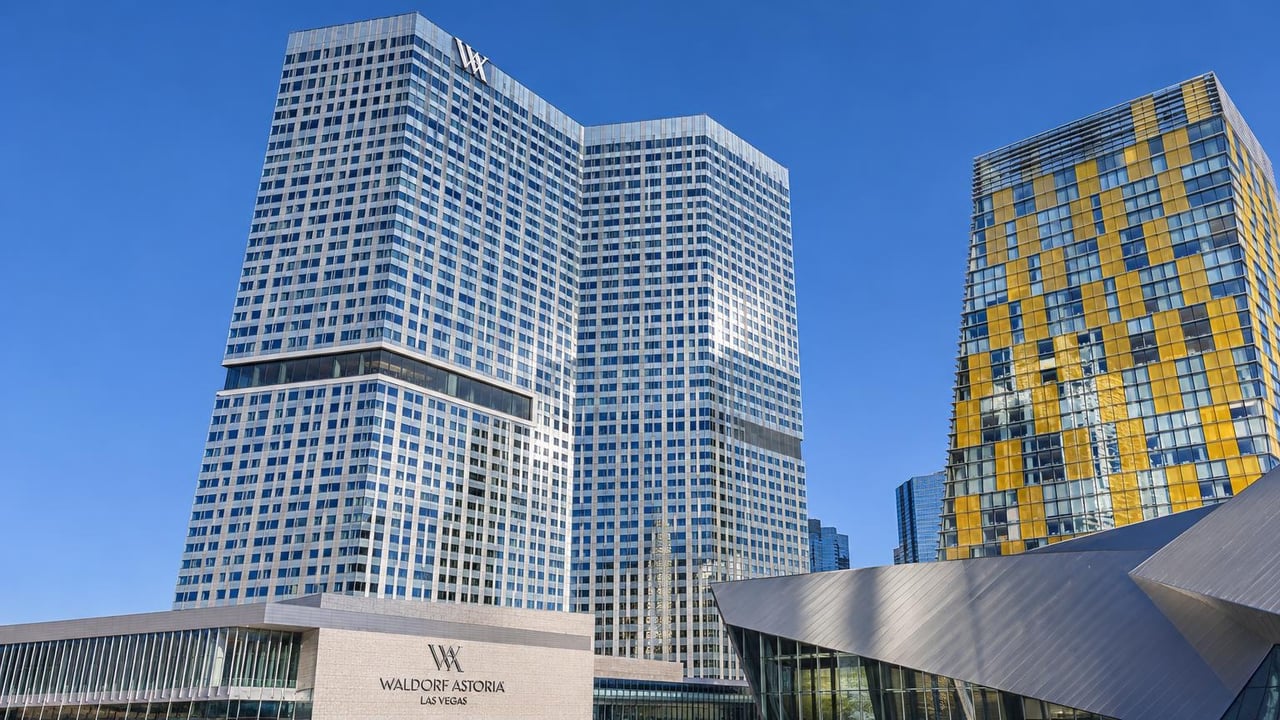
Penthouse 4206 sits on the 42nd floor of the Waldorf Astoria at 3752 Las Vegas Blvd. South. It is one of only six penthouses in the building. The 3,922 square feet hold two bedrooms, three bathrooms, an all-new HVAC system and large windows facing the Strip. On March 13, 2026, it closed at $10.1 million, which the Las Vegas Review-Journal reported as the highest sale in the building's history at the time. The record held for about a month. An $11.8 million Waldorf residence of nearly 4,000 square feet then led the market for the first half of the year.
Las Vegas high-rise sales keep falling while average prices keep setting records, and those two sales are part of the reason. Both trends come from the same cause. The buyers who are still active are buying a different set of units than they used to.
Fewer Sales, Higher Averages
In its first-half 2026 figures, Applied Analysis counted 263 high-rise closings across the valley, down from 293 in the first half of 2025, 339 in the first half of 2024, 405 in the first half of 2023 and 638 in the first half of 2022, according to the Review-Journal's September report. In four years, first-half volume dropped by more than half.
Over the same first half of 2026, the average high-rise sale was $793,194 at $546 per square foot. The 2025 full-year average had been $746,676, already the highest annual average on record, at $543 per square foot. Applied Analysis described 2026 as on track for a record average price and the highest price per square foot in the market's history.
Average price is a ratio, so it moves whenever its ingredients change. Picture a year when the $300,000 units in older towers sell less often and the multimillion-dollar residences at the top keep closing. The average climbs even if no unit in any building is worth a dollar more than it was. A falling sales count next to a rising average is how that kind of shift shows up in the data.
The broader attached-housing market points the same way. Las Vegas REALTORS reported 376 condo and townhome sales in October 2026, down 23.6% from October 2025, with a median of $279,000, down 2.1% year over year. That category includes far more than towers. Still, nothing in it suggests prices rising across the board. The high-rise record is concentrated at the top of the market.
The Building at the Top of the Average
The Waldorf Astoria is a condo-hotel. The bottom 22 floors are hotel, and residents live on floors 24 through 47. Owners can use the hotel's pool and hot tubs, fitness center, dog park, business center, bars and restaurants, as the Review-Journal described in its coverage of the penthouse sale. In its November report on the high-rise slowdown, the Review-Journal noted that brokers singled out the Waldorf as a tower that "still lands strong sales numbers" while the wider market slowed.
Earlier figures show how wide the gap between buildings already was. In the first quarter of 2025, Applied Analysis put Waldorf sales at an average $1,148 per square foot and Vdara at $1,343, while Veer averaged $775, Trump International $640, Turnberry Towers $546, Turnberry Place $483 and Panorama $431, according to the Review-Journal. Those numbers come from a single quarter that is now well in the past. They still show the pattern. Within one corridor, a square foot in the most expensive building cost about three times what it cost in the least expensive one.
Asking prices showed the same split. At the end of the third quarter of 2025, 566 high-rise units were listed valley-wide. The Waldorf's six listings averaged $3 million, the 17 at Sky Las Vegas averaged $1.7 million, and the 35 at Turnberry Place averaged $1.5 million. The building with the highest prices also had the fewest units for sale. When a handful of scarce, high-priced units makes up a growing share of a shrinking total, the market average follows them.
A Skyline That Stopped Adding Towers in 2010
The Waldorf's pull is easier to understand once you know the age of everything around it. Las Vegas has not opened a new residential condo tower since Veer Towers debuted on the Strip in 2010, the Review-Journal reported in November. Every Strip-corridor tower a buyer can tour this week is at least 15 years old. One broker in the story put it plainly: "They're aging, and people want new."
The same report traced the slowdown to costs. Brokers told the paper that HOA dues, building maintenance and insurance keep rising in residential towers. Landlords have not been able to raise rents fast enough to keep up, and new upscale apartment buildings are competing for the same tenants. That has thinned out a major group of tower buyers. The paper described the high-rise buyer pool as long dominated by investors who rent units out and by wealthy buyers using condos as vacation or part-time homes. When investor demand cools, the mid-priced and lower-priced units investors favored sell less often. The units that still sell at a strong pace are the ones bought for the hotel-grade service that comes with them.
The decline is easy to see. Las Vegas REALTORS counted almost 600 high-rise sales in 2025, down from 1,315 in 2021.
The New Towers Are Going Up Away From the Strip
The newest high-rise product in Southern Nevada is going up in other parts of the valley.
The largest project is the Four Seasons Private Residences Las Vegas, two towers of 24 and 25 stories inside the guard-gated MacDonald Highlands community in Henderson. As of the Review-Journal's November 11 report, buyers had signed contracts on 148 of its 171 units, totaling $963 million. Prices ranged from $5.2 million to $35.7 million, and completion was expected in the fourth quarter of 2027. The developers quoted monthly HOA dues of $1.15 per square foot of interior space. That works out to more than $2,600 a month for the smallest units and about $9,700 for the largest. We covered what this tower means for the community around it in our look at who is buying inside the MacDonald Highlands gates.
Downtown, Cello Tower is a planned 32-story condo building in Symphony Park with prices starting in the upper $800,000s. As of the November report, the developer had more than $175 million in residences under contract and had not yet closed on the city-controlled site. City officials expected that land sale to close early in 2027. Nearby in the Arts District, Midtown Las Vegas planned The English Residences, an eight-story hotel-condo with 121 units priced from $725,000 to $1.95 million, and Plaza Tower, with 87 units from $450,000 to $1.85 million. The September report put residential completion in the third quarter of 2027. In Summerlin, Howard Hughes Holdings filed plans in October for Summit House, a proposed pair of 21-story towers with 260 condos in a joint venture with Discovery Land Co.
None of these projects is on Las Vegas Boulevard, so a buyer touring the Strip today is choosing among towers that already exist.
How to Read a Strip Tower When the Average Misleads
This changes how a Strip comparison works. The record average price does not tell a buyer that a unit at Panorama, Trump International or Turnberry Towers has gained value. It shows that the Waldorf and a small number of other premium residences make up a larger share of a smaller pool of sales. A seller in an older tower should not price from the headline number, and a buyer should not assume a building's units have kept pace with it.
Two things matter more than the corridor-wide figure. The first is the building's own record: its recent closed prices per square foot, how many units are listed against how many have recently sold, and how its dues and costs have changed over time. The second is what the building provides that 15-year-old competition cannot copy, such as hotel-grade service, a scarce floor plan or a protected view. The Waldorf's numbers come from its service and its scarcity, since it is no newer than the towers around it. Each existing tower is priced on what it can still provide in a corridor where no new tower has opened since 2010.
For the structural side of that comparison, our earlier piece on why a tower's ownership structure moves value more than the view covers how condo-hotels and residential condominiums trade, and our guide to reviewing high-rise HOA documents on the Strip covers what to request before you make an offer. The dues and price figures in this post are general market information, not legal, tax or financial advice. Please confirm the costs for any specific building and your own situation with the appropriate professional.
If you own a residence in a Strip tower and want to know how it compares with the buildings it competes against, or you are deciding between a Waldorf-level address and the space an older tower gives you for the same budget, Avi Dan-Goor and our team will prepare a building-by-building read for your specific unit. Request a Private Consultation and we will start with your tower's recent sales, not the market average.