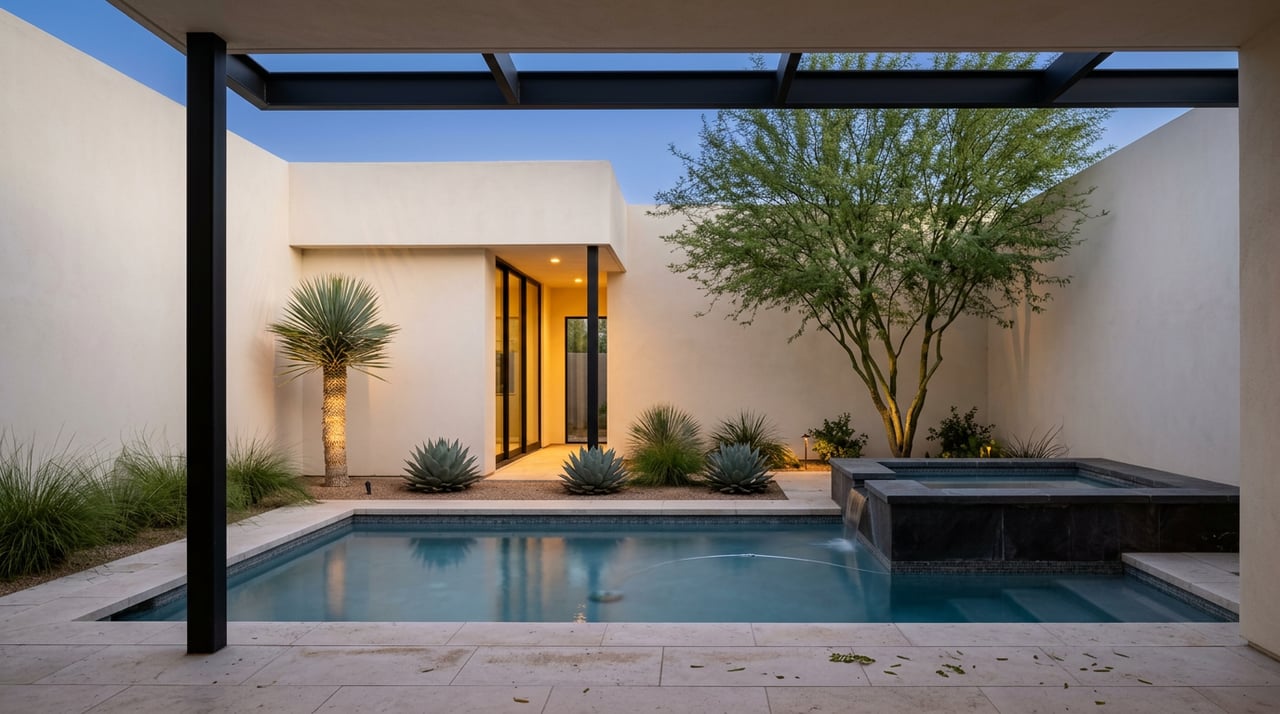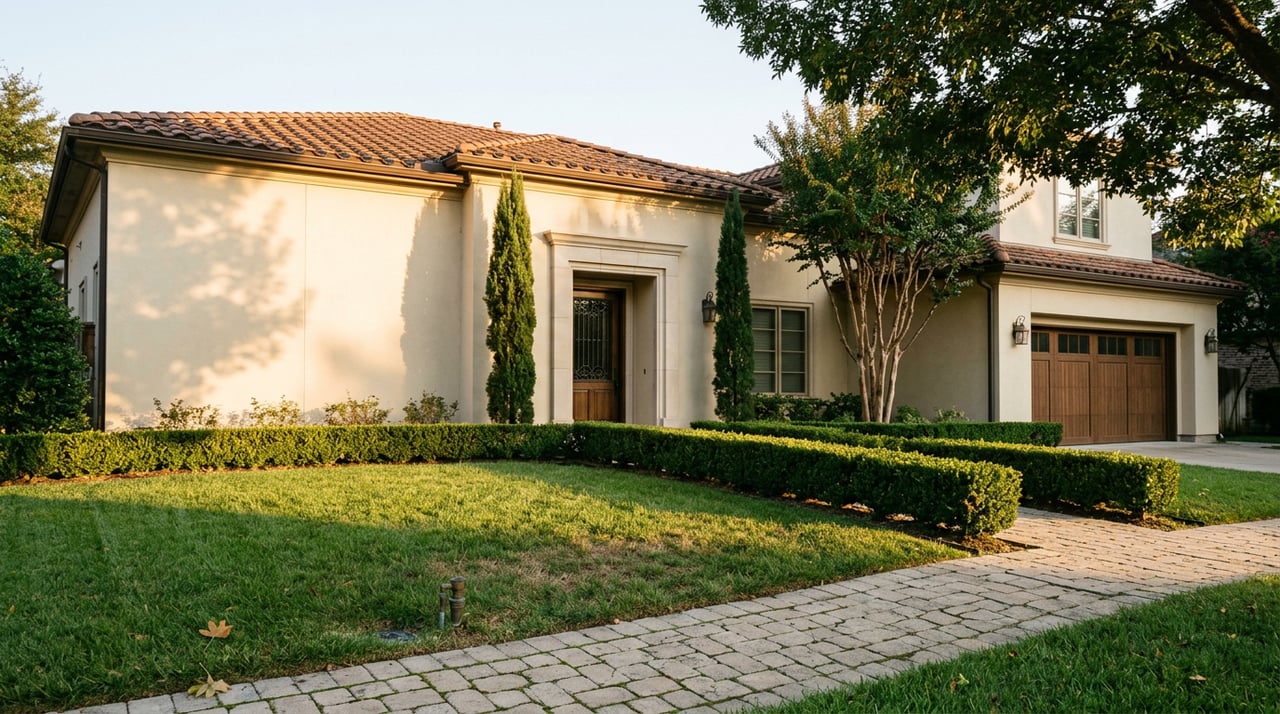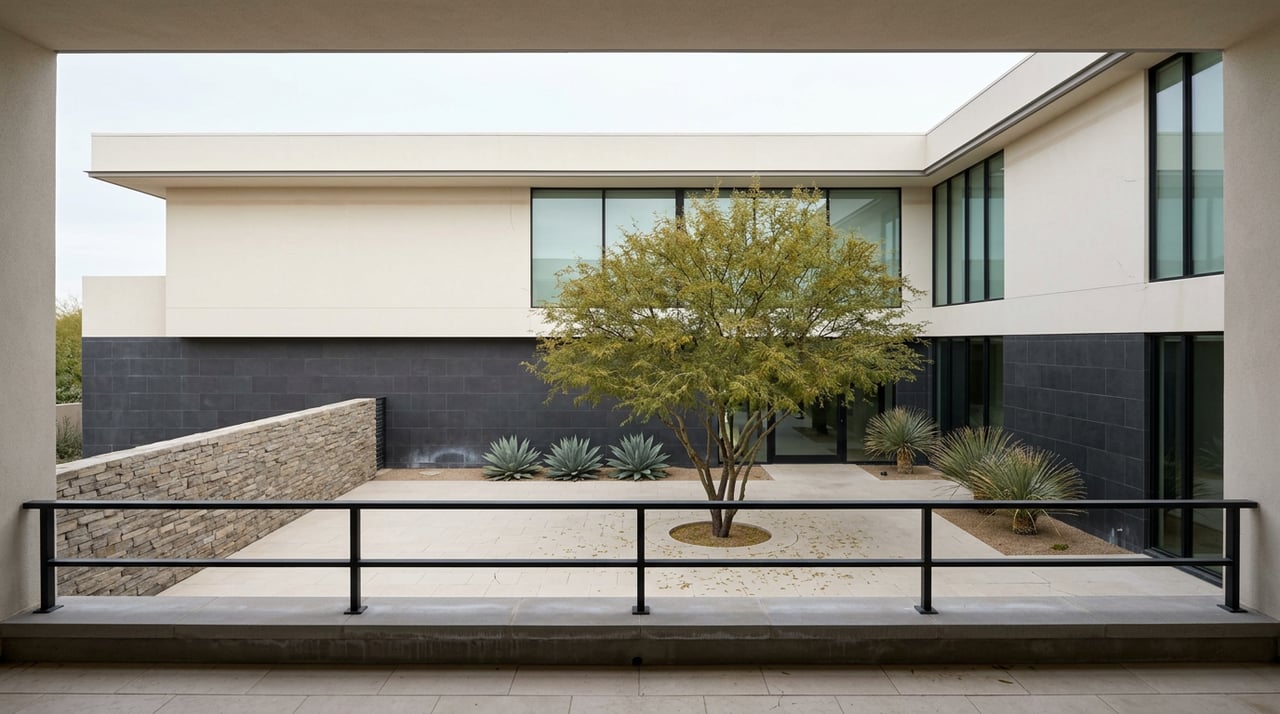
Drive up Horizon Ridge Parkway toward the guard gate at MacDonald Highlands and the profile of the community used to be predictable: two-story custom stucco and glass sitting low against the McCullough Mountains, a golf course threading through the lots, nothing taller than a roofline breaking the sky. That profile is changing. Two tower cranes now stand above the ridge, working a construction site that will eventually hold 171 condominium residences across two buildings, 24 and 25 stories each. For a community that has spent two decades selling itself on low-density, single-family privacy, that is not a small addition. It is a different kind of neighbor, and it is worth understanding what that neighbor actually looks like before you buy or sell a custom lot next to it.
What's Actually Rising Inside The Gates
The project is Four Seasons Private Residences Las Vegas, a $1.3 billion development from Azure Resorts & Hotels, Luxus Developments and Two Roads Development, designed by the architecture firm Wimberly Allison Tong & Goo. Reporting on the project has called it the first high-rise built in the Las Vegas Valley since before the Great Recession. As of a January 2026 construction update from the developers, both towers are in vertical construction, advancing at roughly one floor per week per tower, with site excavation and foundation work already complete. The same update put topping-off for both towers at the end of 2026 and projected owner occupancy for mid-2027. Wolfgang Puck Fine Dining Group has signed on as the project's exclusive food and beverage partner, and the developers secured $781 million in construction financing to carry the project through delivery.
None of that is speculative. It is a construction site with a schedule, and if you are touring or listing a home inside MacDonald Highlands over the next year and a half, that schedule is part of your transaction whether you asked about it or not.
The Delivery Date Keeps Moving
Before you treat mid-2027 as fixed, look at how this estimate has traveled. When site work began in 2023, the developers put the project's 28-month construction timeline at "the end of 2025 or early 2026." By 2024, that had shifted to late 2026. The most recent developer update, from January 2026, separates the milestones: towers topping off by the end of 2026, owners moving in by mid-2027.
| When the estimate was given | Projected completion |
|---|---|
| 2023, at groundbreaking | Early 2026 |
| 2024, one year into construction | Late 2026 |
| January 2026, current update | Mid-2027 occupancy |
That is roughly 18 months of drift across three public updates on the same project. It does not mean the current estimate is wrong. It means anyone timing a purchase around "before construction ends" or "after construction ends" should treat mid-2027 as the best available estimate, not a date to plan a closing around.
What The Tower Is Actually Priced At
The pricing history inside the tower tells its own story about demand. At the 2023 launch, condominiums started at $3 million. A year later, in 2024, the entry price had moved to $3.5 million, and the two remaining penthouses at that point were priced just under $22 million and just under $29 million, up from a $27 million penthouse ceiling the year before. By early 2025, entry pricing had climbed again to $3.95 million, with the project's most expensive listing, a penthouse, at $31.5 million. By January 2026, the developers reported more than $725 million in cumulative sales, with remaining inventory down to two two-bedroom units and a single multi-level Sky Villa.
That is a tower that has been repricing upward at nearly every public update, and it sets a real number for anyone comparing branded high-rise pricing against custom lot pricing in the same community. But a condominium and a detached custom estate on a private lot are different products with different buyers, and the tower's price per square foot does not automatically transfer to a resale on Dragon Peak Drive or Alpine Summit Drive. Where it does transfer is in psychology. A $31.5 million penthouse listing inside your gated community becomes the number every buyer and seller in the enclave measures against, whether or not it is the right comparison.
The Buyer Pool Isn't The One The Enclave Was Built For
Here is the part that matters more than price. MacDonald Highlands was built and marketed around full-time custom-home ownership: guard-gated security, a resident-only country club, a community designed for people who live there. The Four Seasons tower is not selling to that buyer.
Reporting on the project has put roughly 70 percent of buyers as coming from outside Nevada, with concentrations from Southern California, Northern California, Seattle, Washington, and Hawaii, along with buyers from Canada, Australia, China and South Korea. Developers have described many of these buyers as owners with second, third or fourth homes elsewhere, drawn specifically to a "lock and leave" model where they can close the door for months and return to a fully serviced residence.
That is a fundamentally different occupancy pattern than the custom-home households MacDonald Highlands has historically attracted. It does not mean the tower is bad for the neighborhood's values. A branded, globally recognized hospitality name attached to your gate address is more likely to lift comparable pricing than depress it. But it does mean the lived experience inside those gates is shifting toward a seasonal, part-time population layered on top of the full-time custom-home base, and that is a genuinely different community than the one many current owners bought into.
What This Means If You're Weighing A Custom Lot Right Now
If you are evaluating a purchase or a sale inside MacDonald Highlands over the next 18 months, three things are worth knowing going in. First, active vertical construction is ongoing through at least the end of 2026, which means crane activity and site traffic near the tower's footprint are a present-tense fact, not a historical one. Second, the tower's sales partner is Douglas Elliman Development Marketing, which means the pricing and absorption data coming out of that project is being tracked by the same brokerage network that handles much of the custom-resale activity in the community, giving buyers and sellers a more connected read on how the two markets are influencing each other than they would get in a community without that overlap. Third, the occupancy shift toward part-time, out-of-state ownership is a fair question to raise directly with any agent representing a listing near the tower, particularly if full-time community presence matters to how you plan to use the home.
None of this is a reason to avoid MacDonald Highlands. It is a reason to ask sharper questions than the ones a median price or a square-footage comparison will answer for you.
Frequently Asked Questions
Is construction noise or site traffic likely to affect showings before 2027? Vertical construction is active on both towers, advancing at roughly a floor per week as of the developers' January 2026 update, with topping-off targeted for the end of 2026. Expect ongoing site activity through that window.
Does purchasing in the Four Seasons tower include membership at DragonRidge Country Club? DragonRidge membership terms are set and quoted by the club directly rather than published as part of any residential listing, whether that listing sits inside the tower or on a custom lot. Anyone comparing the two ownership types should ask for the current membership schedule as a separate line item before assuming it is bundled into either purchase.
A project this size does not finish quietly, and it does not finish on the first date anyone quotes you. If you are weighing a custom estate against the tower rising above it, or thinking about what either one does to your timeline, The Avi Dan-Goor Group can walk you through what is actually happening on the ground right now. Request a Private Consultation before you make a decision based on a completion date that has already moved twice.